In 1967, I’d been a Peace Corps Volunteer in Enugu for a glorious year, teaching English at the Eastern Nigeria University and carrying on with Frank, a fellow PCV, sometimes accompanying him in his Jeep to a nearby village to visit wood carvers and drink fresh palm wine tapped by small boys from nearby trees. I’d sit inside on the mud bench edging the small round hut while giggling children reached through openings above my head to touch my straight brown hair. I was joyously sowing my wild oats, free to be me at last halfway around the world, when I received a blue overseas airmail announcing an imminent parental visit.
In 1967, I’d been a Peace Corps Volunteer in Enugu for a glorious year, teaching English at the Eastern Nigeria University and carrying on with Frank, a fellow PCV, sometimes accompanying him in his Jeep to a nearby village to visit wood carvers and drink fresh palm wine tapped by small boys from nearby trees. I’d sit inside on the mud bench edging the small round hut while giggling children reached through openings above my head to touch my straight brown hair. I was joyously sowing my wild oats, free to be me at last halfway around the world, when I received a blue overseas airmail announcing an imminent parental visit.
Yikes! I wasn’t eager to let my family in on the fresh new me. Worse, I had lost so much weight that friends worried about my waiflike silhouette. With special permission from the Peace Corps to leave the country for a month, I suggested to Mom and Dad that I might meet them in Morocco.
My plan worked perfectly: Before I was scheduled to arrive in Casablanca, I spent two weeks in the adjacent Canary Islands to fatten up. I was shocked to see poor white people in front of shacks that lined the route from the airport, and hefty Germans crowding the hotel beach in tiny bikinis. We may think of Africans as poor, but my community of black Ebos seemed comparatively healthy. But I was there to eat and eat I did—I can’t remember exactly what, but it did the job. I also developed a nice tan, and by the time I got to Morocco, I was the picture of health.
The Casablanca hotel food was irresistible! Having lived pretty much on goat meat, rice, eggs, and a fruit salad made daily by Anthony, my full-time houseman (whose wife and six children lived in a nearby village), I ate and ate: fragrant curries, memorable melons, sensuous, unique flavors. Sellers walked the streets, balancing on their head shallow baskets brimming with irresistible roasted almonds. Despite knowing better after my childhood in West Pakistan, where we never ate street food, I couldn’t resist: My college French was cheered as I bargained for almonds, and I never got sick.
After my return to the States, for years I looked for a recipe for those Casablanca almonds. Finally, at a garage sale or library, I came upon a Peace Corps cookbook, and there it was, Sautéed Moroccan Almonds, page 28! I’ve been skinning and frying almonds ever since, especially at Christmas, for friends and family who are always surprised that they’d never tasted anything quite like them.
Moroccan Almonds (African News Cookbook)
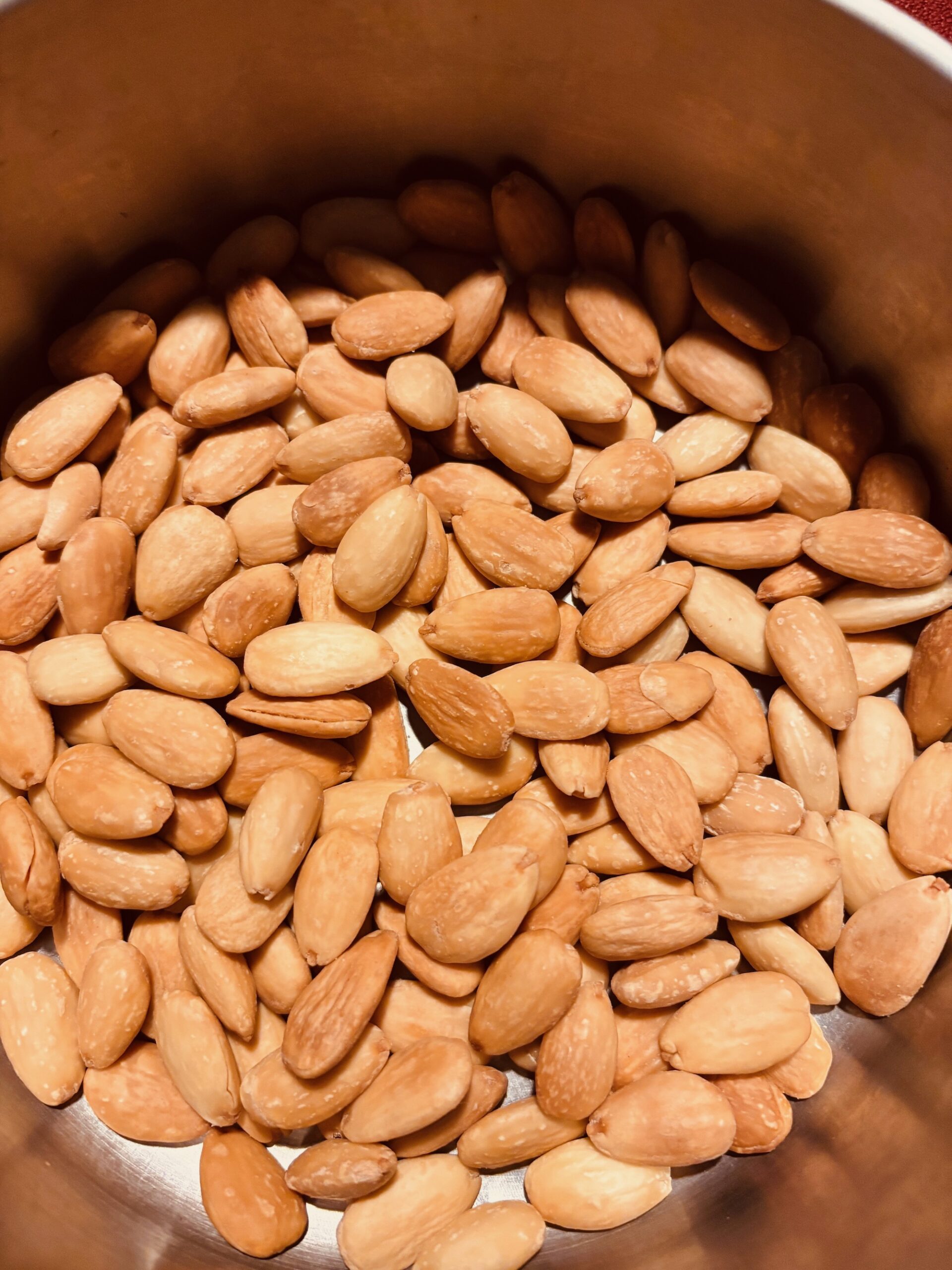
1 lb shelled almonds 1/2 cup vegetable oil 1 Tb. salt
If the almonds have skins, blanch them in boiling water for 1 or 2 minutes. Remove with a slotted spoon to paper towels, cool, and slip off the skins: Pinch off the small end of each nut with your left hand as you squeeze the fat end with your right—the smooth white nut will shoot into your bowl. (You can, of course, buy blanched almonds to skip this step.) Add the salt and let stand for 15 minutes.
Heat the oil in a large skillet over medium heat until a dropped almond sputters gently. Fry the almonds in two batches to a light golden brown. Warning—once the almonds start turning, they brown fast! Drain them on paper towels. Store in a closed tin or jar.
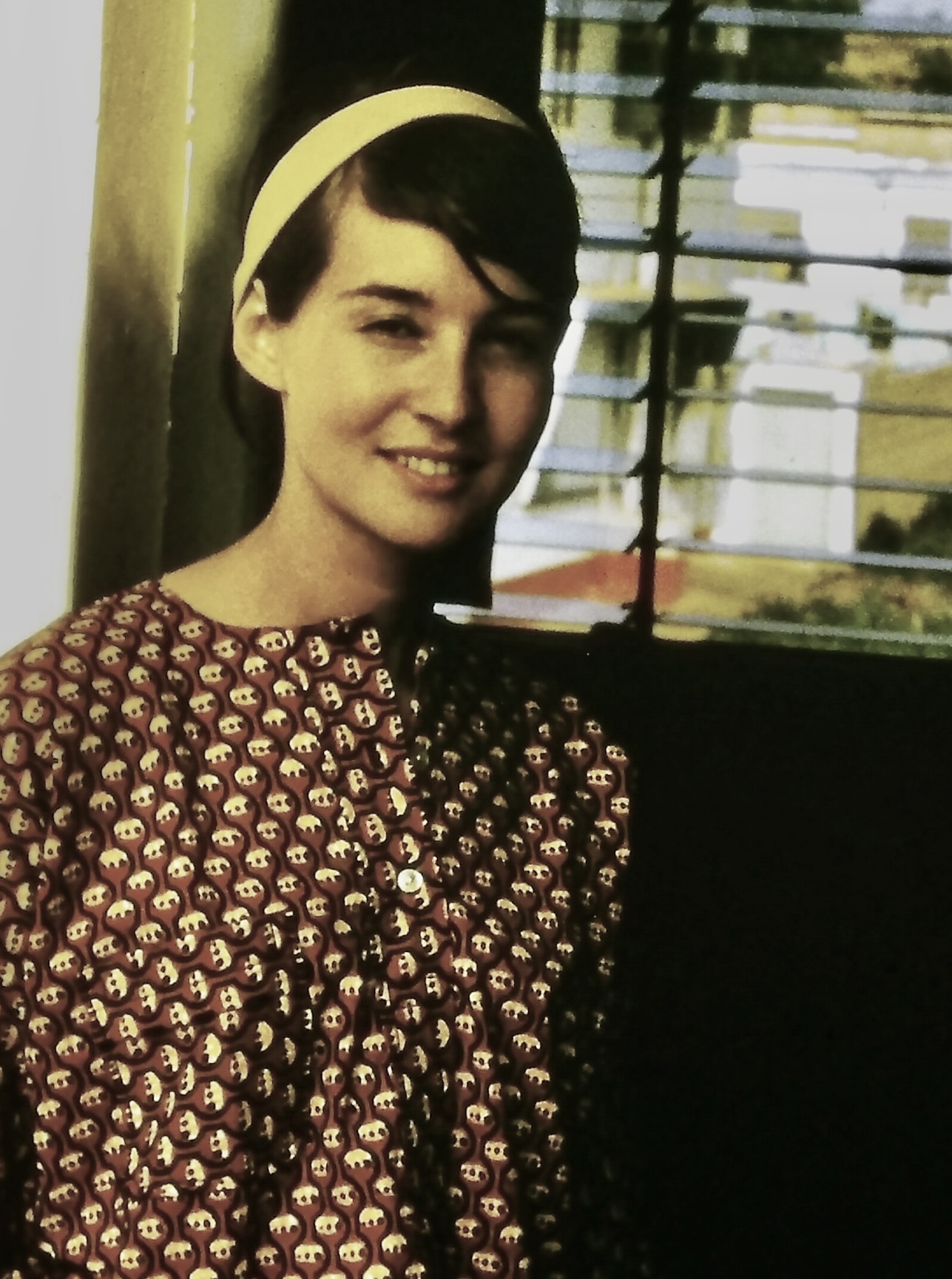
Note: I think my brother Dewey took this picture of me when he stopped to visit during his own African adventures.